
When saddles slide forward: causes and solutions
Saddles that slide forward create a number of real problems. If you’re one of those unlucky riders who’s struggled with this issue - perhaps unsuccessfully - we feel your pain! Saddle slip can be really tricky to resolve, yet the saddle must be placed in the correct spot - and then stay there - in order for your horse to be able to move comfortably and athletically. How well the saddle seems to fit in the cross ties doesn’t matter if it doesn’t stay there.
First, let’s take a minute to understand what happens to form and function if the saddle has gone forward. Once the saddle slides, the horse will definitely be uncomfortable at best, or suffering damage, at worst.
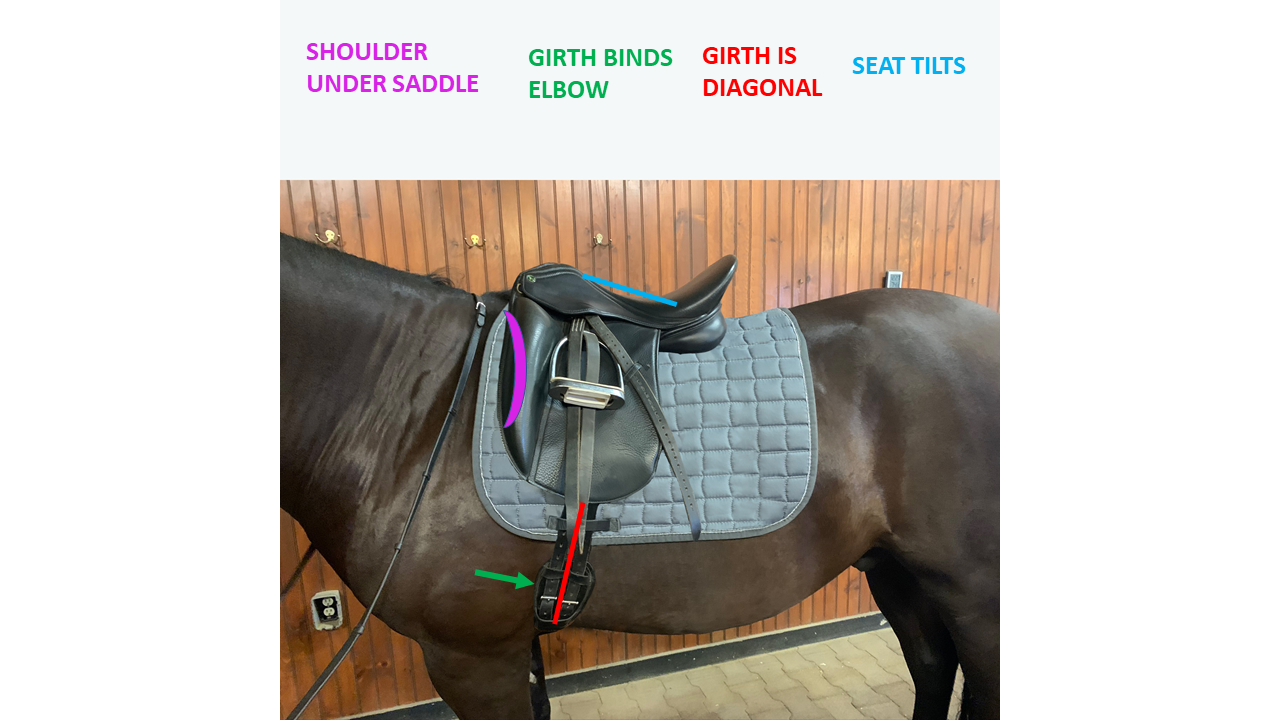
This photo shows some of the many problems that happen when the saddle slides forward!
What problems happen when the saddle slides forward? Here’s a list:
Shoulder restriction. The horse may not be able to comfortably extend or raise the front leg due to clamping pressure from the saddle. Cartilage at the back of the shoulder may be damaged. Horses will react in a variety of ways; most commonly, they will take shorter strides with the front legs when the saddle is on, or perhaps stumble. More rarely, they will become explosive.
Excess pressure on the loins. Once the saddle is too far forward, it will slope up in front and down in back, putting too much pressure under the rear of the saddle. This can easily result in pain and muscle atrophy, which may cause the horse to be uncomfortable, especially expressed during saddling or mounting. This area of the back may be reactive when palpating the muscles.
Rider imbalance. When the saddle is too high in front, the rider will fall to the back of the saddle and have difficulty sitting in neutral pelvis, and also staying up with the movement of the horse. Riders might be unaware that their inability to ride well is related to the position that the tilted saddle is forcing them to take.
Pressure at the base of the wither. Whether from the forward pull of the saddle, or due to the wrong part of the saddle pulled over the base of the wither, pain or damage to the trapezius muscles is a possibility.
Bridging, with excessive pressure front and rear, and a hollow spot underneath the center of the saddle. This is the exact opposite of the pressure pattern you want, which would distribute your weight evenly over the long back muscle, with slightly less pressure at the back of the shoulder and toward the loins.
Elbow chafes or girth rubs. When the saddle is pulled out of position, the girth may rub the horse’s elbows.
So the goal is clear: we want to keep the saddle from sliding out of position, and we want to do this by helping the saddle anchor around the horse’s body comfortably. What to avoid? Wedging the saddle uncomfortably behind the shoulder, or over-tightening the girth to try to keep the saddle in place.
Before we get into solutions, let’s take a second to be sure that the billets and girth are deployed correctly and are not part of the problem.
Use the point billet if your saddle has one - it can be the game-changer. If you have an EQ saddle, your dressage saddle has the option of a point billet or a neutral front billet.
Make sure the girth is actually tight 10-15 minutes into your ride; if the girth has loosened as the horse warms up, it may cause all sorts of issues including forward slip.
Feel the tension on the billets, not just the girth, and make sure that the front billet is not looser than the rear billet.
If you’ve checked all of the above without success, try crossing the billets, front billet to the rear girth buckle and vice versa.
Why your saddle might be sliding forward
Saddle is the wrong size or shape for the horse
Before attempting heroic measures to keep the saddle in place, it’s quite important to begin by assessing whether or not the saddle is suited for the horse. If you have an EQ Saddle Science saddle, you will be able to do your own measurements and and get tree size fitting confirmation from our team with only a few minutes of effort on your part. If you have a different brand of saddle, this will almost certainly require you to use the services of an expert saddle fitter. Whether or not you call in a fitter, we highly recommend that you consider using the Port Lewis Impression Pad to diagnose your fitting issues in a way that you and the fitter can discuss (you’ll find the impression pad — a pressure testing tool - in our store and available for purchase or for weekly rental).
Horse travels “on the forehand”.
When a horse is young or unbalanced, they may be heavily on the forehand. If that tendency is combined with conformational challenges, this might be enough to send the saddle forward. In this case, using front shims to raise the front of the saddle might help temporarily, while the horse develops the strength needed to push from the hind end and to lift the shoulders and then move in balance. Note that this will not happen automatically, but requires systematic training and strengthening exercises as the horse matures.
Pear-shaped Rib Cage
When seen from above, a “pear shaped rib cage” will look a bit like a pear, with the narrowest part at the wither (picture the stem at the chest) and the widest part under the center of the rib cage. In such cases, the saddle may travel to the narrowest part of the barrel, which is forward of the optimal position, and if the horse also has flat shoulders and a narrow wither, the forward slip is extremely likely.
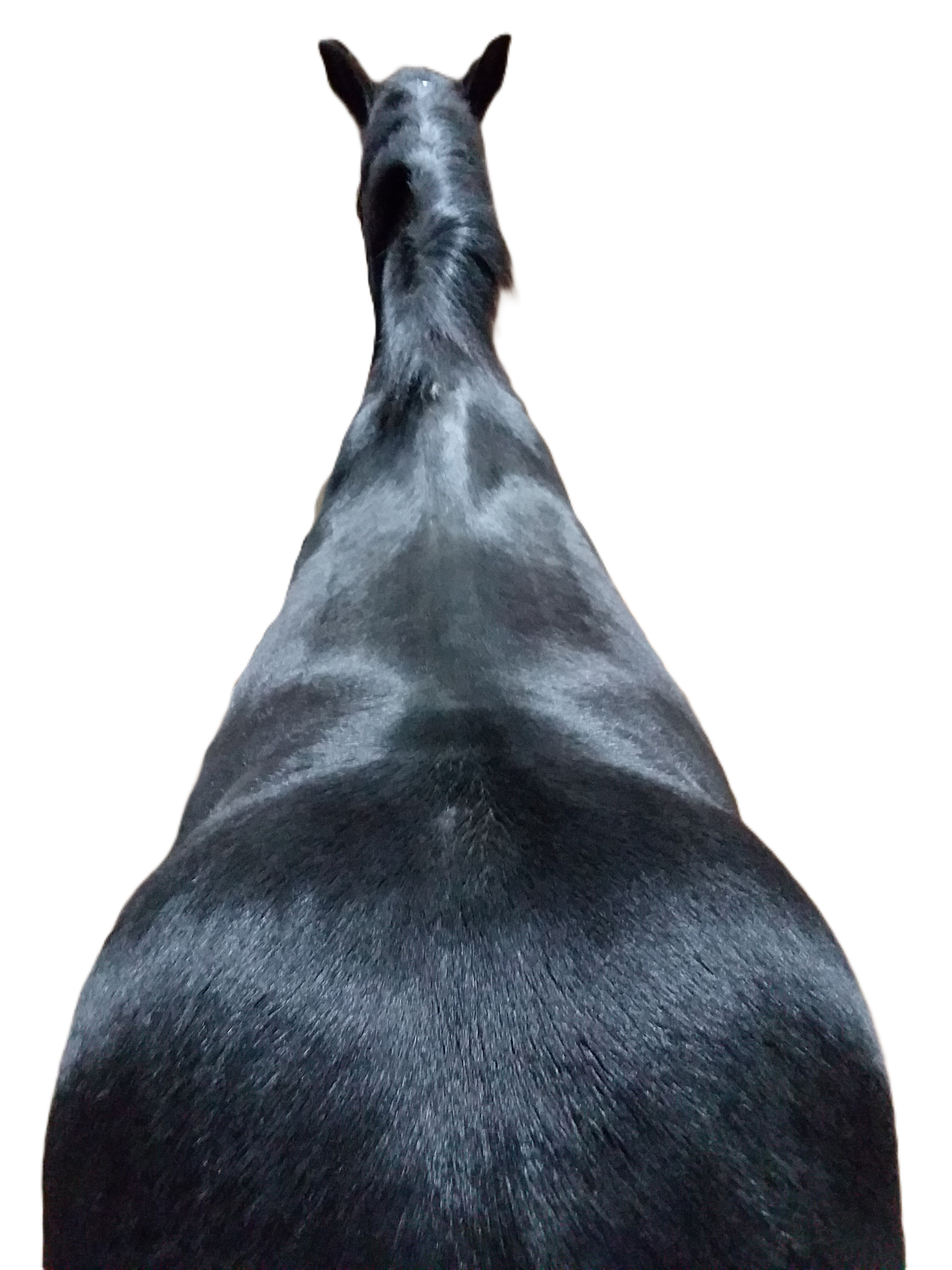
Pear-shaped Rib Cage
When the horse’s barrel narrows significantly from mid-barrel to the shoulders, saddles may slide forward.
Forward girth groove
Whether due to the horse’s build or the result of a “hay belly”, if the “girth groove” (the part of the sternum that goes up the most) is directly behind the elbow, then not only might the saddle be pulled forward, but the horse also may be susceptible to girth galls. If this is a temporary effect of excess weight, then the solution might be different than if it’s a feature of the horse’s build. This can be addressed with a point billet on the saddle, an anatomical girth (though be careful to test first: it only works sometimes, and often creates an imbalance on the sternum, with a gap behind the front legs), or both.
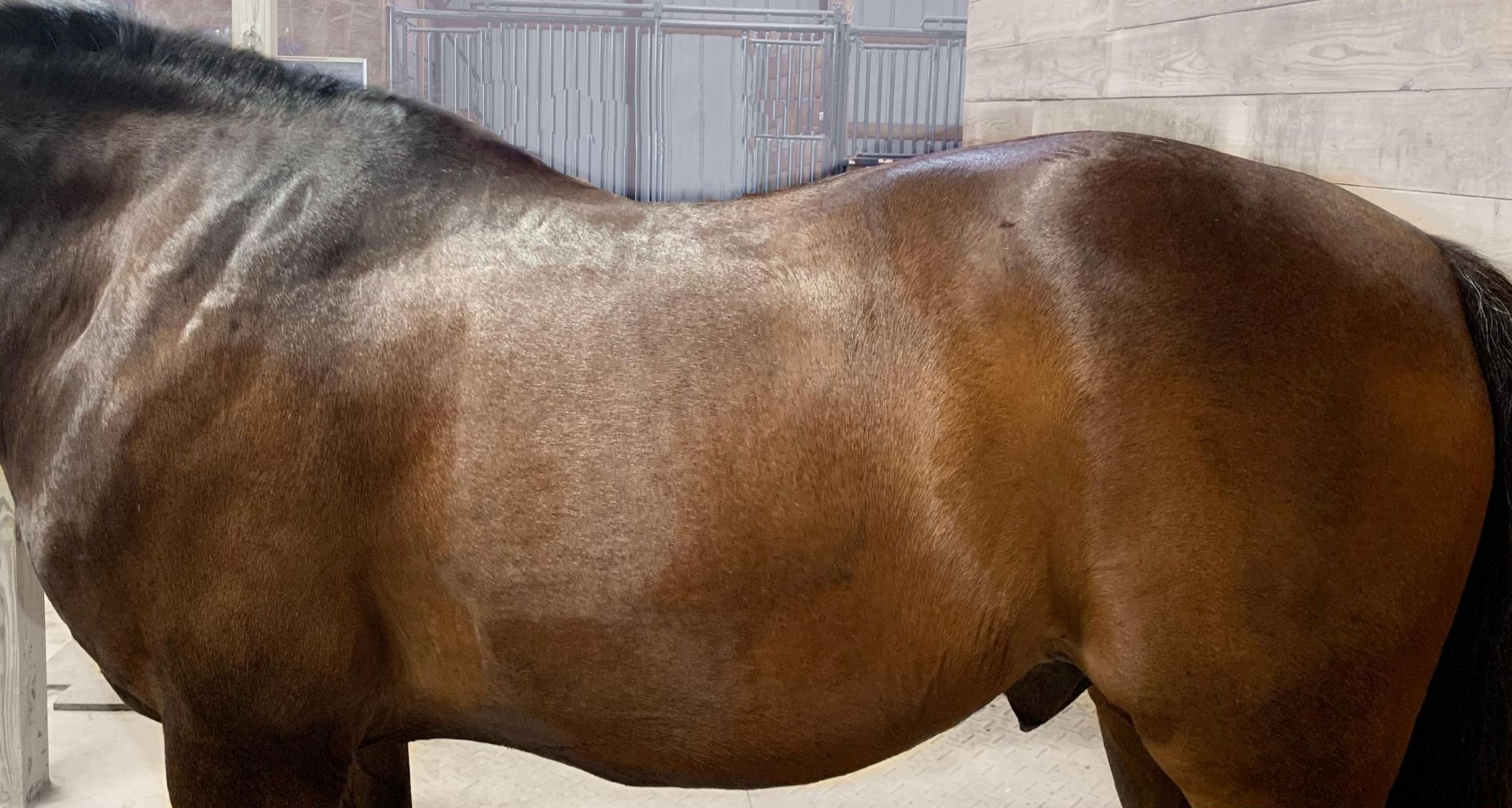
Forward Girth Groove
A girth groove “in the armpit” may pull the saddle forward
Horse is built downhill
When the horse’s croup is higher than the wither, there may be a tendency for the saddle to slide forward, especially if the bearing surface underneath the saddle slopes upward towards toward the croup. If this is the case, the horse might need a shorter panel so that it is not pushed forward by the rising croup; if using an EQ saddle, we can assist in a rear-of-the-saddle adjustment.
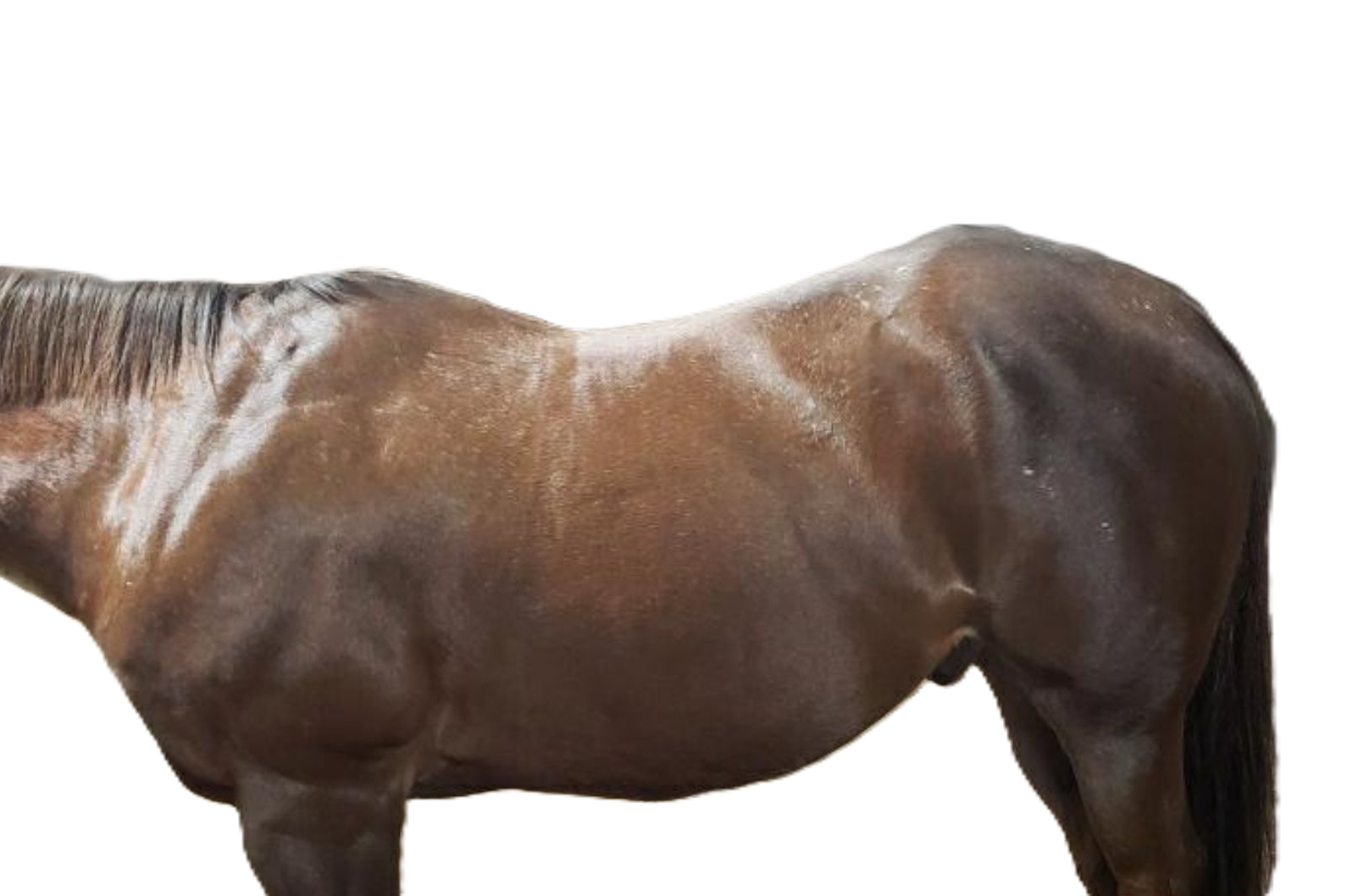
Built Downhill
When the croup is significantly higher than the wither, saddles may go forward.
Saddle is unlevel: low behind
When the rear of the saddle is too low, the rider will, perhaps unconsciously, sit farther back than is common, and this might cause the saddle to slide forward. To test this, try raising the rear of the saddle with shims and assess the result. If using an EQ saddle, we can supply shims, and if those do the trick, can assist you in changing out the height of the rear discs.
Saddle was placed in the wrong place to begin with
If you are placing the saddle too far back and it is sliding into the correct position, you might not actually have a problem. Be sure to evaluate the position of the saddle relative to the back of the scapula both before and after riding. And be sure to check both sides, as the shoulders are often slightly uneven from each other. If using an EQ saddle, we’re happy to get on a video call with you to assess saddle position.
Rider has a thrusting seat
We are seeing “extension pattern” riders less often these days, but there was a tradition of teaching riders to exaggerate the extension of the hip by throwing the shoulders back, well behind the rider’s hips. This driving seat pattern sends the horse forward…and often sends the saddle forward, as well. There are many reasons to abandon “extension pattern” riding, not the least of which is the health and comfort of the rider’s spine in addition to the horse’s back. If you suspect that this is the issue - or that perhaps your trainer or some other rider causes your saddle to go forward when it doesn’t go when you ride in it - use video taken from the side to evaluate the situation. This can be a very delicate situation if it isn’t you causing it.
How to know if it is sliding, and if so, how far?
Place the saddle carefully on the horse’s back, feeling for the back of the scapula to be sure you’re 1” back. Girth the saddle snugly, but not overly tight. Take a photo from the right side, and one from the left to document the situation. Use a contrasting mark (black or silver sharpie, or tempera paint marker) to carefully mark the rear edge of your girth and the rearmost point of your saddle. Yes, mark the horse’s hair. After your ride, immediately after dismounting, take your two photos again, and evaluate how far the saddle the back edges of the saddle have traveled from your initial marks.
When all else fails:
Consider a sticky gel pad directly on the horse’s back; this has been a saviour to many a horse whose riders were about to absolutely give up. Acavello makes a good one; there are others, as well.
Bottom line:
No matter what solutions you try, make sure throughout that you are monitoring your horse’s comfort before, during, and after riding. Any solution which keeps the saddle in place at the expense of your horse’s comfort is a bad one.
May all your rides be good ones!
Carmi